


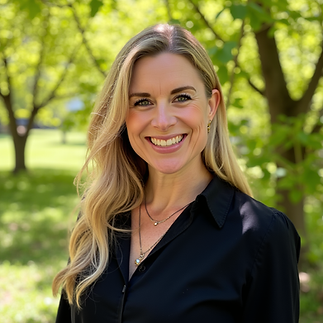
About Marcelle Little, (she/her), LMFT
Marcelle Little is a London-based, California-born holistic psychotherapist and transformational coach for women and mother-daughter couples. Her work integrates depth psychology, somatic healing, parts work, and emotion coaching, with a strong foundation in feminist-informed practices.
She specializes in helping women heal the mother-daughter split, liberate themselves from inherited emotional patterns, and reclaim their power through feminine wisdom. Marcelle’s approach is grounded in the understanding that many of the emotional struggles women face—like people-pleasing, perfectionism, anxiety, shame, and disconnection—are not just personal, but deeply rooted in generational and cultural dynamics that have long devalued the feminine.
Her turning point came when she began working at an eating disorder service in London, supporting girls aged 10–18 and their families, most often their mothers. It was there that she witnessed how disconnection from the body and self often begins in adolescence—and how profoundly the mother-daughter relationship can be a vital resource for healing a young woman’s sense of safety and identity.
At the same time, Marcelle underwent a personal transformation, exploring the mother-daughter split within herself and in her relationship with her own mother. This led her to train in both Emotion-Focused Family Therapy and Rosjke Hasseldine’s Mother-Daughter Coaching Model—approaches that deeply inform her work today.
Marcelle brings this integrative, relational lens to her work, helping women and families move toward healing, wholeness, and embodied connection.
In Her Arms: How Mother-Daughter Healing Fosters Eating Disorder Recovery
This presentation explores the profound impact of the mother-daughter relationship on the development and treatment of eating disorders. Through a feminist psychotherapy perspective, we will examine themes of attachment, separation, individuation, cultural influences, and matrophobia. We’ll discuss how gender role expectations, identity, and generational patterns shape this dynamic, alongside a clinical case discussion. By understanding the mother-daughter attachment model, we can explore how mothers can serve as a vital resource for recovery, fostering healing and resilience rather than focusing on blame or shame.
Where you can see my presentation:
California Pathways to Practice Symposium, Virtual Speaker Series
Friday, July 24, 2026
8:30-10:00 am Pacific Time
Course meets the qualifications for 1.5 hours of continuing education credit for LMFTs, LCSWs, LPCCs as required by the California Board of Behavioral Sciences.
This event is intended to be accessible to all. If financial barriers would otherwise prevent your attendance, please reach out to Robyn@alignedcarecenter.com to discuss financial accommodations. For other accommodations, please click here for more information.
We extend our gratitude to our sponsors for making it possible for us to compensate the speaker and make this event FREE OF CHARGE.
You may purchase CE for $5 by clicking link above.